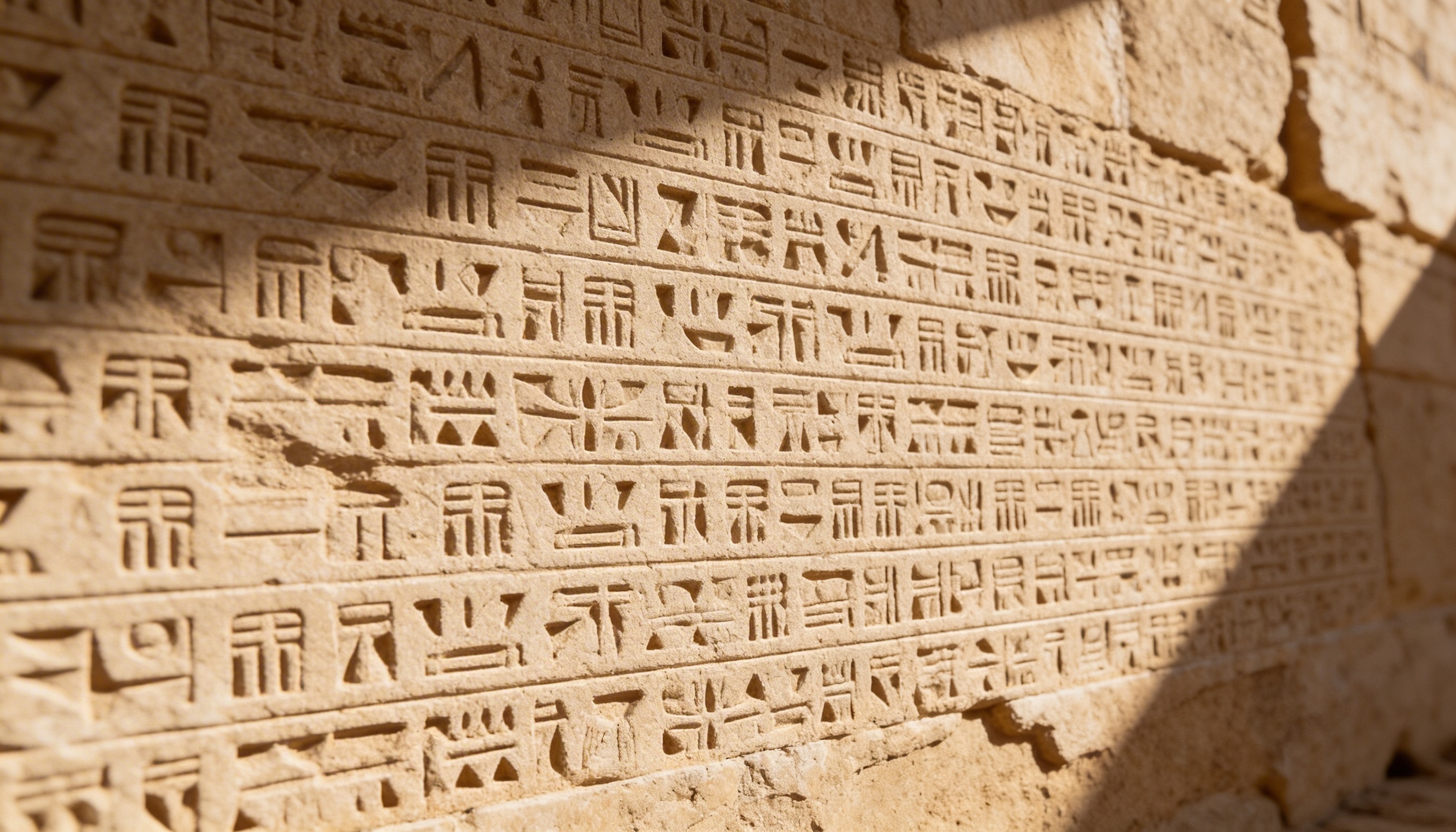
But permanence came with a cost. Once the chisel left the stone, it could not tell you what happened next.
Every document shares the same moment of uncertainty. You finish it, you ship it, and then you lose contact with what follows, the artifact moving silently through the world while you wait for signals that rarely come. If you learn anything, it arrives later, indirectly: through analytics dashboards detached from context, through feedback relayed by people who weren’t in the room, through intuition shaped more by hope than evidence. For centuries, this silence was unavoidable. Stone doesn’t talk back.
But software does, and still, even now, our documents remain mute.
In recent years, we’ve tried to fix this silence by making documents dynamic, adding interactivity, personalization, conditional flows, AI-generated variations, real-time adaptation. The result was movement, but not retention.
Most smart content systems still force the same tradeoff: permanence or intelligence.
On one side sits authorship, intent, and provenance. Stable, auditable, but blind. On the other sits adaptation and personalization. Reactive, but forgetful of origin.
Many systems now change documents on the fly without being able to explain why those changes happened, what justified them, or how they relate to the original intent. Authorship dissolves, provenance blurs, and trust erodes with it. We traded clarity for adaptability and got neither.
When people hear “documents that learn,” they imagine documents rewriting themselves in the background, but that’s drift, not learning. Real memory accumulates experience without erasing origin. Before tools learned, humans remembered. Not storage, but lived history: a way to hold onto what happened without losing what was intended. Documents should do what stone never could, remain stable while carrying their own experience forward.
The shift documents require is not autonomous rewriting, it is architectural. The ledger becomes the bridge between permanence and intelligence, the thing that allows both to coexist.
Rather than letting documents change silently, we give them something simpler and more durable: a ledger. A record that travels with the document and captures where it has been, how people moved through it, which sections drew attention and which were abandoned, how it was authored, revised, shared, and forked across time. Nothing is rewritten. Every interaction becomes a fact, recorded in sequence, forming an unbroken chain of evidence that links each event to what came before it, a verified history embedded in the document itself rather than scattered across external dashboards that don’t follow it into the world.
That history persists even when devices go offline, and when they reconnect, parallel chains merge while preserving every branch. No central authority decides what happened. The document carries its own record wherever it goes.
For this to matter, events must reference meaning rather than mechanics. Not “a button was clicked” but “the pricing objection section was revisited,” or “the call to action was reached and then abandoned.” The document already understands its own structure: sections, intents, narrative roles, the hierarchy of ideas the author built into it. History attaches to that structure, so what accumulates over time isn’t raw telemetry but interpreted experience.
And engagement is only part of what belongs in the ledger. Authorship is memory. Versions are memory. Forks, distributions, and signatures are memory. Together, these records give the document lineage: who shaped it, how it evolved, which version someone actually encountered, where insights came from. This is what makes learning trustworthy. You can trace every conclusion back to the record.
The document stops carrying information and starts carrying understanding, intelligence that travels with it across every handoff, every fork, every new context it enters, and remains provable at every step.
Systems can propose alternative flows, reordered narratives, personalization approaches, but as suggestions, not silent edits. The ledger informs. It does not override. Change remains an intentional act, linked back to the record that justified it.
The document adapts without forgetting.
When documents develop memory, they stop being static deliverables and become accountable participants in knowledge work. They gain continuity rather than autonomy, and the distinction matters. A document that remembers doesn’t guess why it should change. It can prove it.
Stone did not change, but civilization did, because memory persisted and people carried experience forward through time. Documents can do the same: remain stable, travel freely, fork safely, and accumulate understanding without erasing what they were at the beginning.
Memory that endures.
Memory that can be audited.
Memory that belongs to the document, not the platform.