You pull data from different places, align internally, build the story, and prepare to present to 5, 10, sometimes 20+ stakeholders: days of preparation for one to two hours in the room. Some stakeholders are engaged, some are multitasking, and some drop early. And once the presentation ends, the moment is usually gone, sometimes before you even finish.
The QBR is supposed to be one of the most important moments you have with a customer. It's where you connect your platform to business impact, help your champion show progress internally, and create momentum into renewal or expansion. Most of them don't do that.
When the conversation isn't clearly tied to the customer's business, people check out. If they can't connect it to revenue, cost savings, efficiency, or risk, it's just another vendor presentation. The meeting goes fine, the deck gets sent, and it rarely does much on its own.
The real opportunity starts after the meeting, when the content has to stand on its own. That is the test most QBRs fail.
Does your champion use it with leadership? Can a new stakeholder pick it up and understand the story quickly? Does it help move a conversation forward around budget, priorities, or expansion? Or does it sit in an inbox after the call?
That is the difference between a QBR that checks the box and one that drives something.
When I was carrying my own accounts, I absolutely cared about the leave-behind. What changed when I started leading a team is how much more I think about consistency and scale. As an individual contributor, you can sometimes make up for weak content with strong instincts, good relationships, and knowing how to handle the room.
At a team level, you realize pretty quickly that the process has to hold up without depending on individual heroics.
Customer Success should be helping the people you work with every day look good internally, helping them tell a clear story, connect your platform to real outcomes, and carry that message forward when you are not there. That is what gets people promoted, what protects renewals, and what creates expansion.
In most enterprise environments, the QBR is not where decisions get made. It is where information gets introduced. The real decisions happen later, across different conversations, with different stakeholders. If your content can't survive that, it's not doing enough.
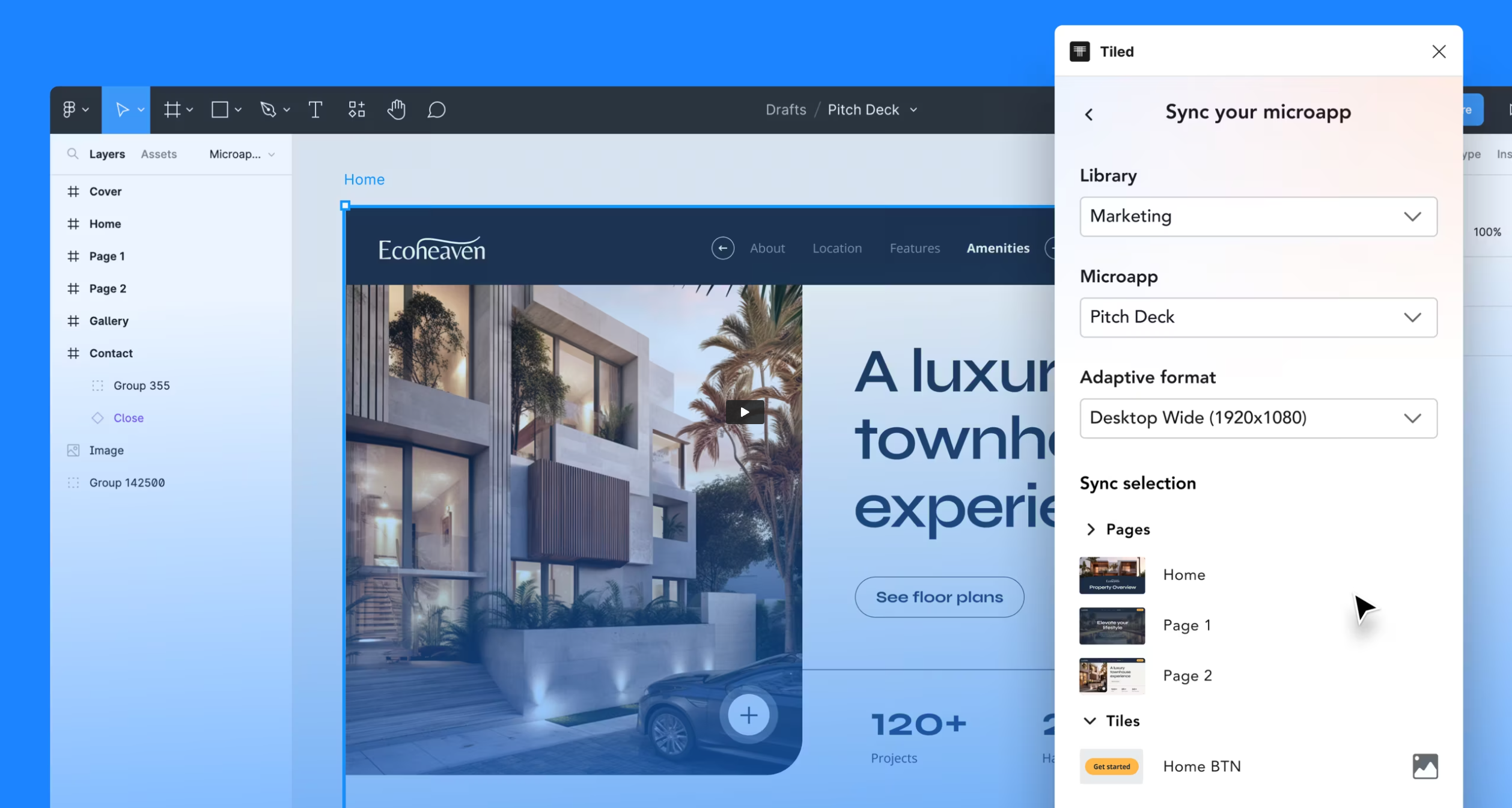
We saw this recently when one of our customers, an enterprise GTM team, was preparing for a QBR with a large global manufacturing company. Rather than relying on a standard slide deck to guide a session with over 20 stakeholders, they used an interactive microapp to run the conversation and serve as the leave-behind afterward.
The feedback was overwhelmingly positive, and within days multiple follow-up workshops were on the table. The manufacturing company’s internal champion started sharing the microapp more broadly, and another adjacent group was quickly identified as a strong next use case. With budget planning season approaching, the GTM team used the microapp to get ahead of broader internal planning and future investment conversations rather than treating the session like a one-off.
None of that is impossible with a traditional deck, but consistent follow-through is harder when the content depends on the presenter to make it land. What made this different is that the microapp did not stop being useful when the meeting ended. People could move through it, understand it, and share it without needing someone to present it again.
That is the difference between content built for a moment and content built to keep creating value.
Most teams treat the leave-behind like a formality: send the slides and move on. But that asset gets forwarded internally, shows up in budget conversations, and lands in front of stakeholders who weren't there and won't consume it the way it was presented. They skim, jump around, and look for what matters to them.
That is where Tiled changes the equation. The content doesn't depend on the original presentation to make sense; different stakeholders can move through it based on what they care about, the champion can keep using it internally, and new conversations start without needing the original presenter to step back in and recreate the story.
The QBR stops being a meeting deliverable and becomes something the customer uses to build alignment, bring in additional teams, and keep momentum going internally. That is a better shot at expansion, stronger executive buy-in, and a clearer path into future investment conversations.
Teams are already putting in the work; the problem is not effort. The problem is that too much of that work gets trapped in a one-time presentation.
If you are asking your team to invest that much time in a QBR, the output should keep working as the conversation moves beyond the meeting. It should help the customer carry the message forward internally, help stakeholders understand the impact quickly, and connect your platform to the outcomes that matter in renewal, budget, and expansion conversations.
That is the real opportunity. Build QBRs that don't just land in the room. Build QBRs that keep working after.